Water Coming Through Your Ceiling From the Flat Above: What to Do
Water coming through the ceiling from the flat above? Stop the damage, document it, contact the right people and understand who is likely to pay.
If water is coming through your ceiling from the flat above, switch off the power to that area, catch the water, take photos and tell the neighbour and the managing agent or landlord straight away. Ask them to turn their water off. Then tell your insurer. Who pays depends on the cause, your lease or tenancy and the buildings and contents policies, so check your policy. Keep a record of every call and message.
Key Takeaways
- Safety first: water and electrics do not mix. Turn the circuit off if a light fitting is wet.
- Photograph and video everything before you clean up or move things.
- Contact the flat above, then the managing agent, freeholder or landlord, in writing.
- Tell both your buildings and contents insurers early. Do not wait for blame to be settled.
- Leaseholders should check the lease and building insurance for who is responsible.
If water is coming through your ceiling from the flat above, contain it, make the area safe and get the source switched off. Photograph everything, then tell the flat above, the managing agent, freeholder or landlord, and your insurer. Who pays depends on the cause and on your lease or tenancy, so check your policy and your documents rather than assuming.
What to do right now
Make it safe
If water is near a light fitting or socket, switch that circuit off at the consumer unit. Stay out from under a bulging ceiling.
Contain the water
Move furniture. Put buckets under drips. Do not poke a bulging ceiling unless a plumber or the fire brigade advises it, as it can come down suddenly.
Contact the flat above
Knock, call or message. Ask them to close their stopcock or isolation valves and check for a running tap, bath or appliance.
Tell the managing agent or landlord
If nobody answers, contact the agent, freeholder or your landlord. Many buildings have an emergency number.
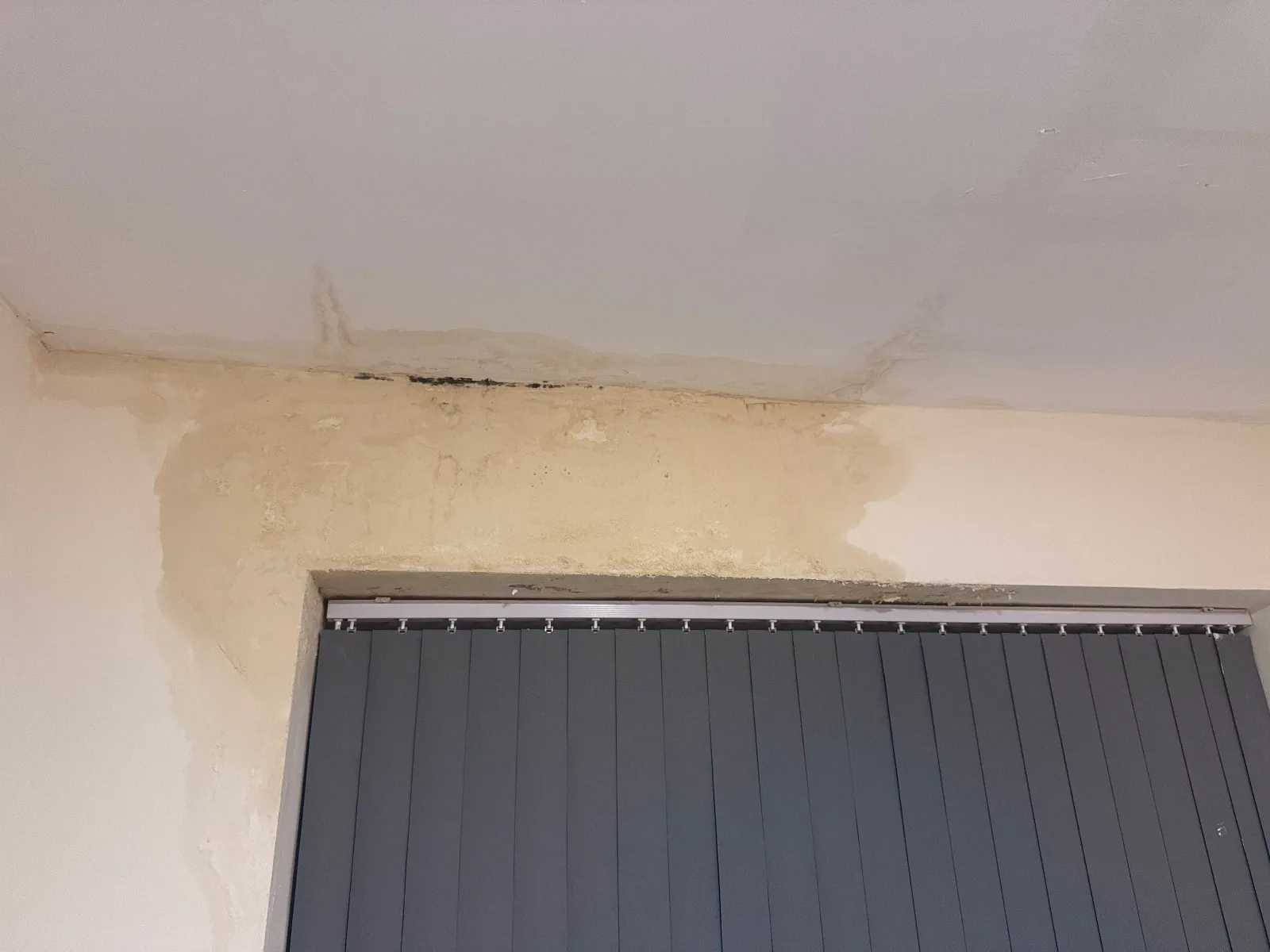
Evidence to keep
Insurers and landlords ask the same questions. Make it easy to answer them.
- Dated photos and short videos of the stain, drip and any damaged belongings, taken before you clear up.
- A note of the date and time you first noticed it, and when you contacted each person.
- Copies of messages and emails. Follow phone calls with a short written summary.
- Receipts for any emergency costs, such as drying or hotel stays.
- Any plumber's report on what they found and where.
Do not throw damaged items away until your insurer has seen the photos or said you can.
Who is responsible?
It depends on where the leak starts. A leak from a tap, appliance or pipe inside the flat above is normally a matter for that flat's owner or landlord. A leak from a shared pipe, a roof or a communal riser may sit with the freeholder or management company under the lease. Thames Water's pipe responsibility guidance says the company is not responsible for pipes inside your property, so do not expect the water company to fix a leak in the flats.
We cannot give legal advice, and each building is different. Leaseholders should check their lease and the building insurance. Tenants should report in writing to the landlord. Our guide to burst pipes between landlord and tenant sets out the usual practice.
Insurance and your lease
Tell your insurer as soon as you can. Buildings insurance, often arranged by the freeholder, may cover the structure, such as the ceiling. Contents insurance may cover your belongings. Check your policy for excess, exclusions and whether the leak has to be sudden. If the cause is unclear, some policies pay for tracing and access. Read whether home insurance covers leak detection and how to claim after a burst pipe before you ring.
Finding the leak
If the flat above cannot find the source, a survey can. Signs worth sharing include a stain that grows after a shower or bath, water that appears only when a washing machine runs, and damp that comes and goes. If it is a pipe, our leak detection service can locate it, and a water leak repair follows once access is agreed. Once the source is fixed, water damage repair and drying can start.
What it costs
If you need us to check the pipework on your side or provide a report, leak detection prices are fixed. Main water leak detection is a fixed £595. A comprehensive investigation is £660: it checks the whole property for all types of leaks, excluding roofs, and includes tracer gas, moisture mapping and pressure testing. Detection by the hour is £180 per hour with the tracer gas bottle included. No find, no fee. No call-out fee when you book the visit in advance. Need someone now? Emergency call-out is £70 and we guarantee someone is with you within one hour. Who ultimately pays for the work is a separate question. Check your policy and lease.
- No call-out fee when you book the visit in advance.
- Need someone now? Emergency call-out is £70 and we guarantee someone is with you within one hour.
- No find, no fee on leak detection.
- Main water leak detection: fixed price £595.
- Comprehensive leak detection investigation: £660. It checks the whole property for all types of leaks, excluding roofs, and is all-inclusive: tracer gas, moisture mapping, pressure testing and so on.
- Leak detection by the hour: £180 per hour, tracer gas bottle included.
- Plumbing repair work (not detection) is £95 per hour, and the £60 call-out is waived over 2 hours.
- You get a written price before any repair work starts.
- Gas work is done by Gas Safe registered engineers.
- We answer 24/7 on 020 7870 3200.
When to call a plumber
Call at once if water is still coming through and you cannot get the supply off upstairs, if it is near electrics, or if the ceiling is bulging. Call 020 7870 3200, any hour, or use the contact page. For a faster route in an emergency, see our emergency plumber page.
Ceiling leaking and need it stopped?
If you cannot reach the flat above, or you need your own pipework checked, call us. We can look at your side and give you a record of what we find.
Call 020 7870 3200Or send us the details, see pricing or read about our leak detection service.
Frequently Asked Questions
Who pays for water damage from the flat above?
It depends on the cause and on your lease or tenancy. A leak from the flat above is often the responsibility of that flat's owner or landlord, but building insurance and the lease can change that. Check your policy and tell your insurer early.
Can I turn off the water in the flat above?
Not without their consent. Ask the neighbour to close their stopcock or isolation valves. If they are away and water is flowing, contact the managing agent, landlord or freeholder, and in an emergency the building's emergency contact.
Should I tell my insurer even if I think the neighbour pays?
Yes. Tell them promptly. Your insurer can handle the claim and recover costs from the other party later if appropriate. Delay can cause problems.
Is a ceiling leak dangerous?
It can be. Water can collect above plasterboard and bring it down, and it can reach light fittings and wiring. Stay out from under a bulging ceiling and switch off the circuit if fittings are wet.
What if the water stops and I cannot see where it came from?
A leak that comes and goes can be a hidden pipe, a shower or bath overflow or a washing machine. Ask the flat above to check, and have a survey done if it returns. Keep the dates.
Sources and further reading
Source links checked 3 November 2026. Scheme rules and manufacturer instructions can change; use the current official guidance for your account or exact appliance.