Leak Under a Floor or Concrete Slab: Signs and Next Steps
Signs of a hidden leak under a floor or concrete slab, how to confirm it without digging, and what happens next: detection, reroute or repair.
Signs of a leak under a floor or concrete slab include a meter that moves with everything off, a warm spot on the floor, damp or musty smells, lifting laminate or cracked skirting, and unexplained pressure loss. Confirm it by testing the meter, then have the pipe traced without digging blind. Afterwards you either repair the pipe where it lies, or reroute it through walls or the ceiling.
Key Takeaways
- The first test is the water meter: if it moves with everything off, water is escaping.
- Warm patches, damp smells and lifting floors are the classic signs.
- Tracing the leak first avoids opening more floor than you need to.
- Options are repair in place or reroute the pipe. A plumber will explain which fits.
- Tell your insurer early, as some policies cover the tracing and access.
The signs of a leak under a floor or concrete slab are a water meter that moves when everything is off, a warm patch on the floor, a damp or musty smell, flooring that lifts or cracks, and pressure that falls for no clear reason. A leak like this is hidden, so confirm it with a meter test, then have it traced before anyone breaks the floor.
Hidden water leak signs
- Water meter moves with everything off. This is the clearest sign of a cold water leak.
- A warm or hot spot on the floor. A hot water or heating pipe leaking under the floor can heat the surface above it.
- Damp, musty smell in a room with no visible water.
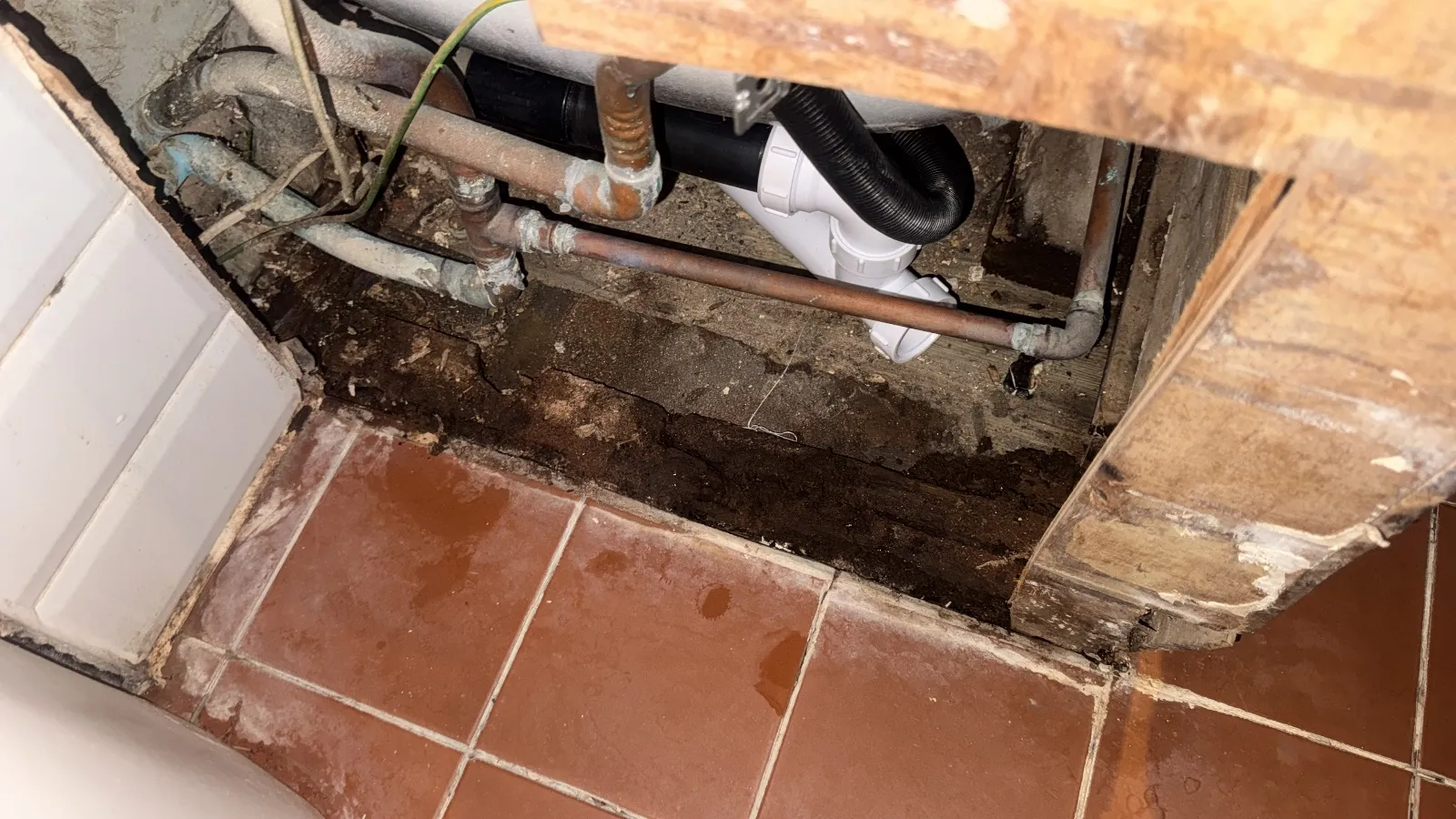
- Lifting or swelling laminate, wood or carpet edges and cracked tiles.
- Damp on skirting boards or the base of walls and peeling paint.
- The sound of running or hissing water when the house is quiet.
- Low water pressure or a boiler that keeps losing pressure.
- A bill that has risen with no change in how you use water.
How to confirm it
Do the meter test first. Switch everything off and read the meter, then read it an hour later. Our guide to a water meter spinning with no visible leak explains the steps. If the meter stays still but the boiler loses pressure, the leak is more likely on the heating side. See central heating leaks and pressure loss.
Then close the internal stopcock. If the meter stops, the leak is inside the house. If it keeps moving, it is on the pipe between the meter and the stopcock, often buried.
How the leak is found
A plumber should narrow it down before cutting anything. The usual methods are:
- Pressure testing sections of pipe to see which one drops.
- Acoustic listening with ground microphones to hear the leak.
- Thermal imaging to show warm pipes and wet areas.
- Tracer gas in tricky cases where sound is unclear.
Our leak detection service uses these steps to keep the opening small. The difference between finding and fixing is explained in leak detection vs leak repair.
Repair or reroute?
Once the leak is located you generally have two choices. You can repair it where it lies, which means opening the slab or screed, fixing the pipe and making the floor good. Or you can reroute the pipe through a wall, the ceiling void or a skirting duct and abandon the old run. Rerouting often disturbs less of the floor but may need decorating. Which is better depends on the layout, the finishes and the pipe's condition. If the same pipe has leaked before, a reroute is worth discussing. Repairs to concealed pipes fall under water leak repair, and a failed supply pipe may be a burst pipe repair job.
What it costs
A leak under a slab needs proper detection. Main water leak detection is a fixed £595. A comprehensive investigation is £660: it checks the whole property for all types of leaks, excluding roofs, and includes tracer gas, moisture mapping and pressure testing. Detection by the hour is £180 per hour with the tracer gas bottle included. No find, no fee. No call-out fee when you book the visit in advance. Need someone now? Emergency call-out is £70 and we guarantee someone is with you within one hour. Repair and reinstatement are separate from detection and are priced for the job. Typical market ranges are in our UK leak detection cost guide.
- No call-out fee when you book the visit in advance.
- Need someone now? Emergency call-out is £70 and we guarantee someone is with you within one hour.
- No find, no fee on leak detection.
- Main water leak detection: fixed price £595.
- Comprehensive leak detection investigation: £660. It checks the whole property for all types of leaks, excluding roofs, and is all-inclusive: tracer gas, moisture mapping, pressure testing and so on.
- Leak detection by the hour: £180 per hour, tracer gas bottle included.
- Plumbing repair work (not detection) is £95 per hour, and the £60 call-out is waived over 2 hours.
- You get a written price before any repair work starts.
- Gas work is done by Gas Safe registered engineers.
- We answer 24/7 on 020 7870 3200.
Insurance
Some buildings policies cover tracing and access for a leak that has caused insured damage. Check your policy, and ring your insurer before work starts. See whether home insurance covers leak detection for the questions to ask.
When to call a plumber
Call if the meter moves with the stopcock shut, if a floor is warm or lifting, or if you smell damp and cannot find a source. Phone 020 7870 3200 at any hour, or use our contact page.
Warm floor, damp smell or a meter that will not stop?
Give us a call. We will walk through what you have seen and whether it needs a survey.
Call 020 7870 3200Or send us the details, see pricing or read about our leak detection service.
Frequently Asked Questions
What are the signs of a leak under a concrete slab?
A moving water meter with everything off, a warm patch on the floor, a damp or musty smell, a hissing sound at night, lifting flooring and falling water pressure. One sign alone is not proof, but two or three together are worth a survey.
Can you find a leak under a slab without digging?
Usually yes. Pressure tests, acoustic listening, thermal imaging and tracer gas help locate the pipe to a small area before any floor is broken.
How do I know if the leak is on the heating or the cold water?
Heating leaks often show as boiler pressure dropping. Cold mains leaks show up on the water meter. Warm patches on the floor can point to hot or heating pipework.
Is a slab leak an emergency?
If water is appearing, close the stopcock and call. If it is slow and hidden, it is still worth dealing with quickly, because the water can undermine finishes and cause damp.
Will I have to dig up the whole floor?
Not normally. Tracing aims to limit the opening to a small area. Sometimes it is cheaper to reroute the pipe through a wall or ceiling, and your plumber can explain the options.
Sources and further reading
Source links checked 3 November 2026. Scheme rules and manufacturer instructions can change; use the current official guidance for your account or exact appliance.